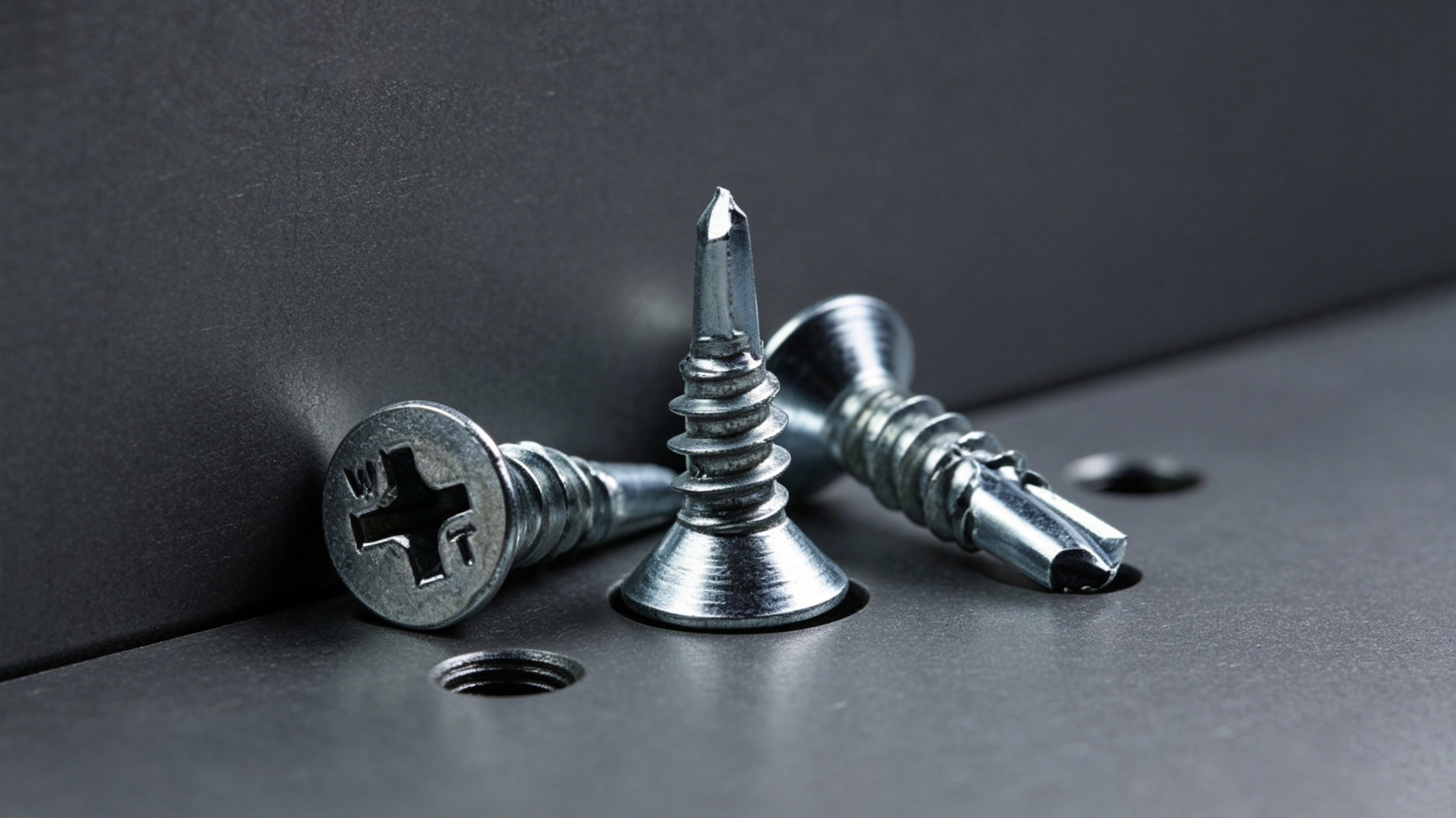

As we all know, the simplest way to prevent drilling screws from rusting is to isolate the screws from moisture and humid environments. Methods such as proper placement, protective coatings and sealants, or choosing specially formulated anti-rust screws are all effective. For this reason, many businesses and households are equipped with corresponding anti-rust tools. In many cases, besides environmental factors, the type of drilling screw also determines whether it rusts. Some household remedies may work for slightly corroded screws, but are ineffective for severe rusting.
From a physical perspective, rust is the result of a chemical reaction between certain metal compounds and water vapor. The presence of oxidizing agents—especially salt—tends to accelerate metal corrosion. Screws used outdoors or in humid environments such as bathrooms and swimming pools are particularly prone to rust. The best way to shield screws from ambient moisture is to cover them with a protective sealant. Commercial anti-rust products are usually available as liquid paints or sprays, most containing zinc (well-known for corrosion resistance) and graphite powder to improve adhesion. In high-humidity environments, it is important to coat the entire drilling screw before use. However, coated screws may be slippery if directly used in construction, making installation difficult. Coating only the screw head simplifies installation while protecting the shank.
Drilling Screws, Hebei Wotu Fastener Manufacturing Co., Ltd.